 Save
SaveAlmost every shelf, mirror or picture that has ever crashed off a wall failed for the same reason: the anchor was wrong for the weight. Not the screw, not the wall — the anchor.
The good news is that this is a solved problem. Match the weight to the right anchor and the item stays there permanently, whether it's a 2-pound frame or a 90-pound TV. Here's the whole system.
First: what's actually behind your wall?
 Save
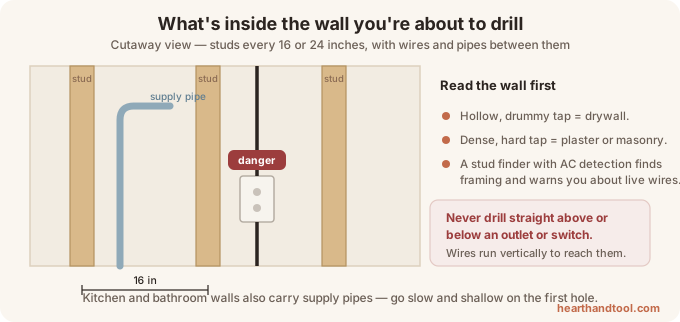
SaveKnock on it. A hollow, drummy sound means drywall — a half-inch panel with air behind it, which holds nothing by itself. A dense, hard tap means plaster over lath (older homes) or masonry.
Then find the studs — the vertical wood framing every 16 or 24 inches. A $20 stud finder with AC detection is the tool to buy, because it also warns you about live wires. Two habits that keep you safe: never drill directly above or below an outlet or switch (wires run vertically to them), and be extra careful in the wall behind a kitchen or bathroom, where pipes live.
A screw into a stud is stronger than any anchor ever made. If your item lands anywhere near one, use the stud and skip the rest of this guide.
The anchor chart
 Save
SaveFor hollow drywall, when there's no stud where you need one:
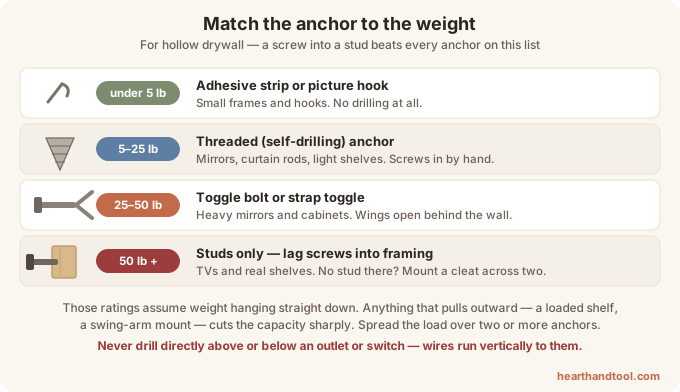
- Under 5 lb (small frames, hooks) — an adhesive strip or a simple picture hook with a thin angled nail. No drilling.
- 5–25 lb (mirrors, small shelves, curtain rods) — a threaded (self-drilling) drywall anchor. Screws in with a screwdriver, no pilot hole, holds far better than the old plastic cone anchors.
- 25–50 lb (heavier shelves, cabinets, large mirrors) — a toggle bolt or a modern strap toggle. A metal wing opens behind the drywall and spreads the load.
- 50 lb and up (TV mounts, floating shelves, anything you'd stand under) — studs, or nothing. Use lag screws into framing. If the studs don't line up, mount a wood cleat across two studs and attach to that.
Two notes that matter more than the numbers: those ratings assume shear load (weight hanging down the wall). Anything that pulls outward — a shelf loaded at its front edge, a swing-arm TV mount — cuts capacity dramatically. And always spread the load across two or more anchors; a rated 50-pound anchor is not a promise about a single point of failure.
 Save
SavePlaster and masonry are different
Plaster over lath: drill a pilot hole first — plaster cracks if you drive anything into it dry. Toggle bolts work well; self-drilling anchors do not, because they crumble the plaster instead of threading into it.
Brick, block or concrete: you need a masonry bit, a hammer drill (rentable for about $30 a day) and sleeve or wedge anchors. Drill into the mortar joint rather than the brick face when you can — it's softer and easily repaired later.
The five-minute install that never fails
- Mark your spot, then check for a stud and for wires with the finder.
- Drill the pilot hole the anchor package specifies — not "close enough." An oversized hole is the second most common failure after wrong anchor choice.
- Set the anchor fully flush with the wall.
- Drive the screw until snug. Stop. Overtightening strips the anchor out of the drywall, and you'll feel it spin.
- Hang the item and give it a firm downward tug before you trust it with anything breakable.
When to stop and rethink
If you're mounting a TV, a heavy shelf over a bed or crib, or a cabinet that will hold dishes, and you cannot hit at least two studs — don't improvise with more anchors. Add a cleat across the studs and mount to that. It's twenty minutes and a $5 board, and it turns a drywall gamble into a structural connection.
Planning a shelf specifically? Our guide to building a floating shelf that holds real weight covers the bracket hardware and the leverage math that trips people up.