 Save
SaveA door that sticks, rubs or refuses to latch is one of the most common annoyances in any home — and one of the most satisfying fixes, because 9 times out of 10 you can solve it in under 30 minutes with tools you already own.
The trick is diagnosing the cause before you reach for sandpaper. Sand the wrong edge and you'll have a door that sticks in summer and whistles in winter. Here's how to find the real problem in about two minutes.
First: find where it rubs
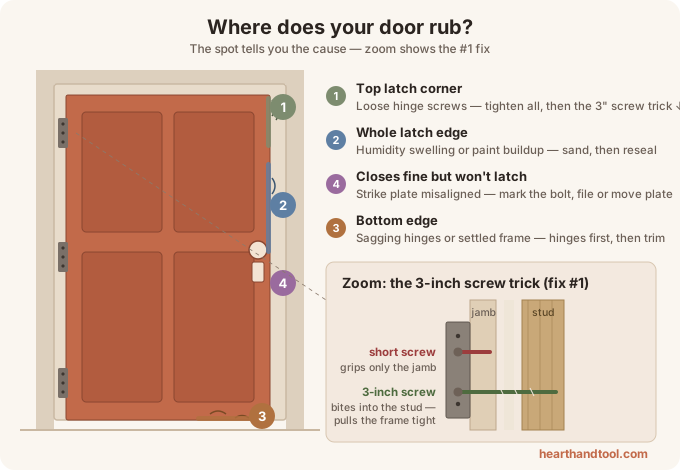
Close the door slowly and watch (or listen for) where it drags. Then run a dollar bill around the closed door's edge — wherever the bill won't slide, that's your contact point. Mark it with painter's tape. The location tells you the cause:
- Rubs at the top corner on the latch side → loose hinge screws (Cause 1) — the most common by far
- Rubs along the entire latch edge → seasonal swelling (Cause 2) or paint buildup (Cause 3)
- Rubs at the bottom → sagging hinges or a settled frame (Cause 4)
- Latch doesn't catch but nothing rubs → misaligned strike plate (Cause 5)
 Save
SaveCause 1: Loose hinge screws (the 5-minute fix)
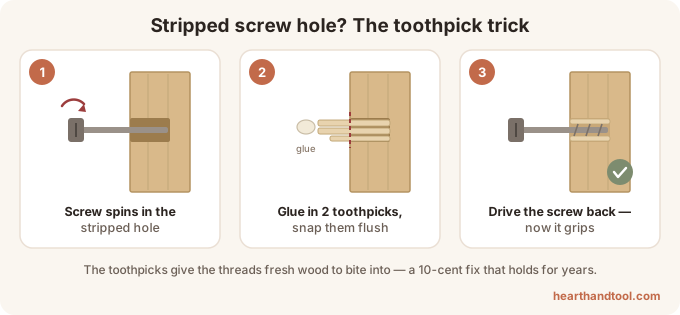
Over years of use, the screws holding the top hinge pull loose, and the door sags diagonally toward the latch side. Before anything else, open the door and tighten every hinge screw with a screwdriver — not a drill, which can strip the holes.
 Save
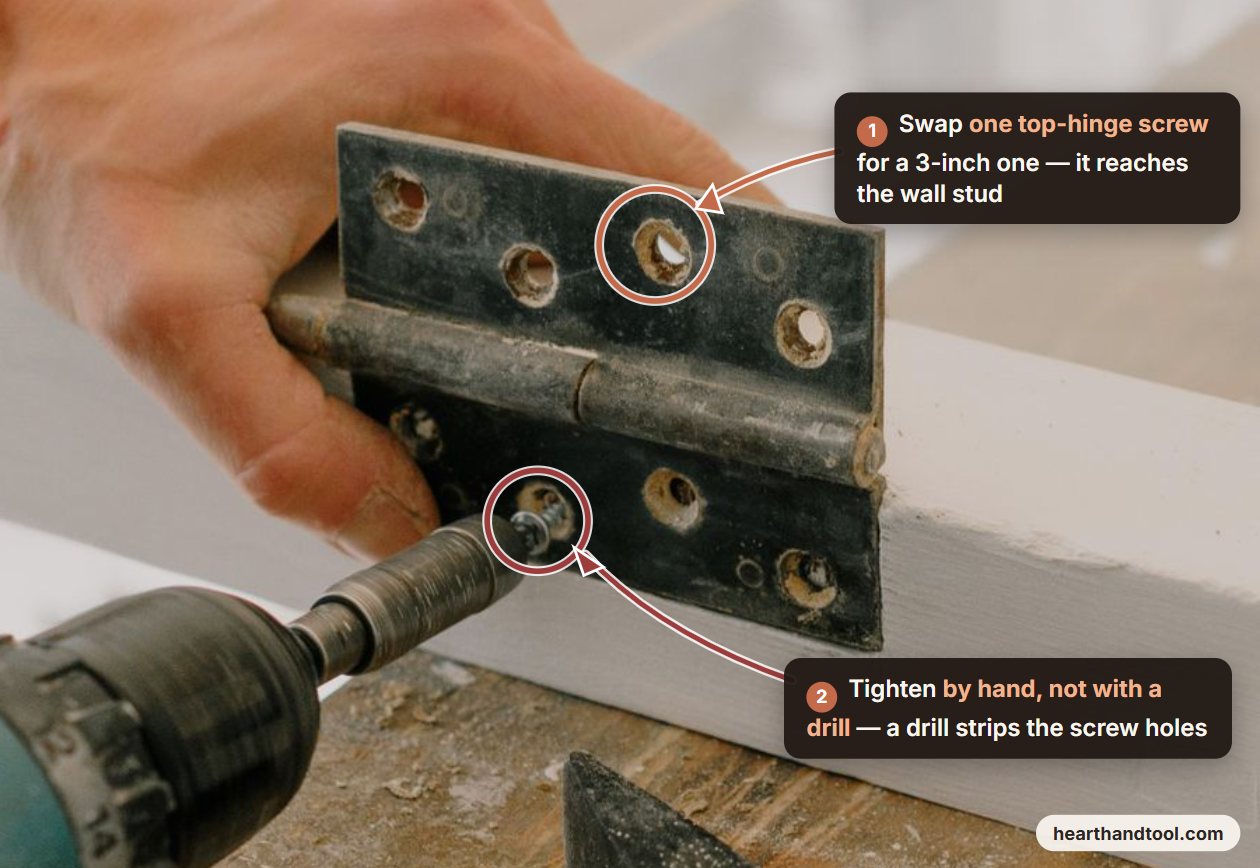
SaveIf a screw just spins without tightening, the hole is stripped. The classic fix: remove the screw, dip a couple of wooden toothpicks or a golf tee in wood glue, tap them into the hole, snap them flush, and drive the screw back in.
 Save
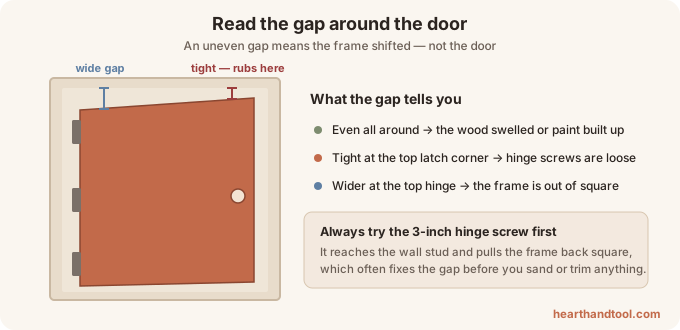
SaveFor the top hinge, an even better trick is replacing one short screw with a 3-inch screw that reaches past the jamb into the wall stud — it pulls the whole frame tight and often fixes the sag instantly.
Cause 2: Seasonal swelling
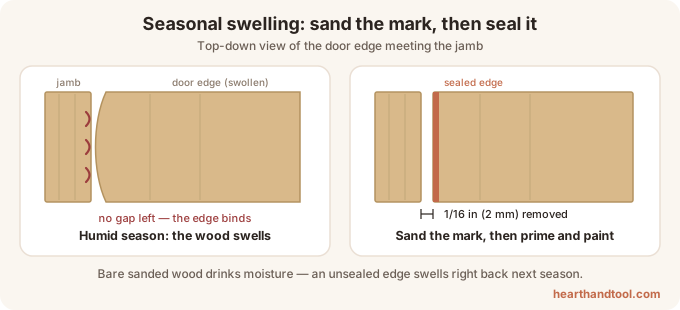
Wood absorbs moisture. If your door only sticks in humid months, the door is swelling against the frame. You have two options:
- Wait it out if it's mild — it will shrink back in the dry season.
- Plane or sand the contact point if it sticks badly. Remove about 1/16" (2 mm) at the marked spot, no more. Use a hand plane or 80-grit sandpaper on a block, then smooth with 120-grit.
 Save
SaveImportant: after sanding or planing, seal the raw edge with primer and paint (or clear finish). Bare wood drinks moisture, and an unsealed edge guarantees the problem returns worse next year.
Cause 3: Paint buildup
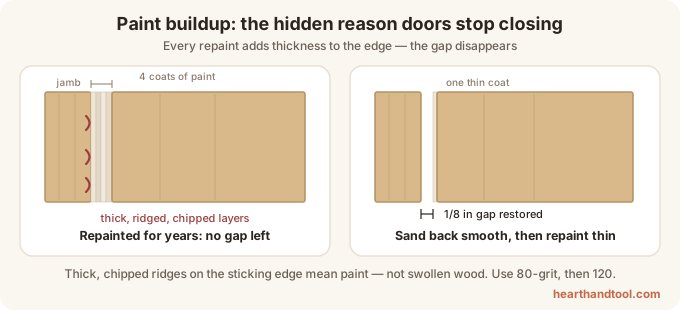
A door repainted several times can carry enough paint on its edge to lose the 1/8" gap it needs. Look at the sticking edge — if you see thick, chipped or ridged paint layers, that's the culprit. Sand back to a smooth surface with 80-grit, wipe clean, and repaint with one thin coat.
 Save
SaveCause 4: Sagging frame or settled house
 Save
SaveIf the gap around the door looks uneven — tight at the top latch corner, wide at the top hinge corner — and hinge screws are already tight, the frame itself has shifted. Try the 3-inch screw trick in the top hinge first. If the rub is at the bottom corner and minor, sanding the contact point is a fair fix. If the frame is visibly out of square, the door may need to be removed and trimmed — still a DIY job, but set aside a weekend morning and a circular saw with a clamped straightedge.
Cause 5: The latch misses the strike plate
 Save
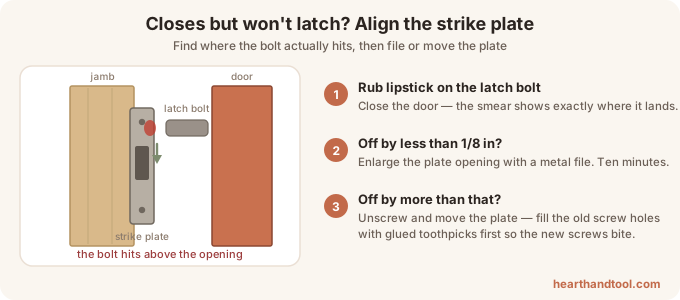
SaveIf the door closes freely but won't latch, the latch bolt and the strike plate hole no longer line up. Rub some lipstick or a dry-erase marker on the latch bolt, close the door, and see where it marks the plate. If it's off by less than 1/8", enlarge the plate's opening with a metal file. More than that, unscrew the plate and move it (fill the old screw holes with the toothpick-and-glue trick first).
What this fix costs
Nothing, in most cases — a screwdriver, sandpaper and patience. Worst case: a $5 box of 3-inch screws or a $15 hand plane that will serve you for decades. Compare that to a handyman visit at $75–150 and this is one of the highest-return repairs in the house.
When to call a pro
If several doors in the house started sticking at the same time, or you see new diagonal cracks above door frames, the house may be settling unevenly — that's a foundation conversation, not a door problem. Get a structural inspection before cosmetic fixes.