 Save
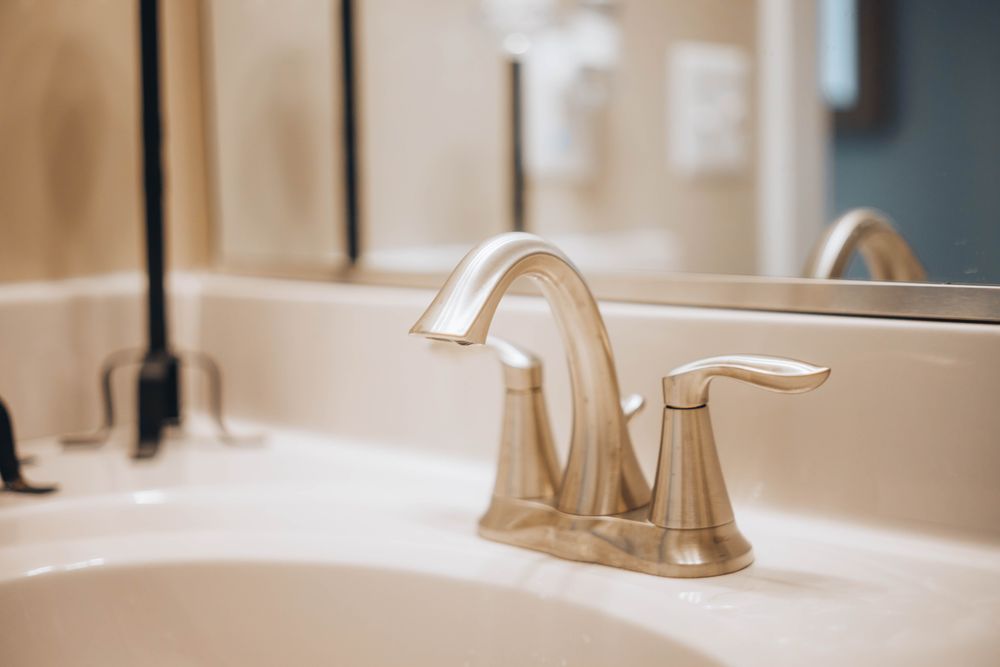
SaveThat drip you've been ignoring wastes over 3,000 gallons a year — and it never fixes itself, because a drip is always a worn part, and parts only wear in one direction. The part in question usually costs between $2 and $20, and the repair is a solid beginner plumbing job: worst case, you reassemble it and call a pro no worse off.
The whole game is knowing which of the two faucet families you own, because the fix is different for each.
Before anything: the two rules of faucet repair
- Close the shutoff valves under the sink (the two small oval handles — righty-tighty), then open the faucet to release the leftover pressure. No shutoff valves under there, or they're seized? Close the house's main valve instead.
- Plug the drain with a rag. Faucet repairs involve small screws and springs, and an open drain is exactly where they want to go.
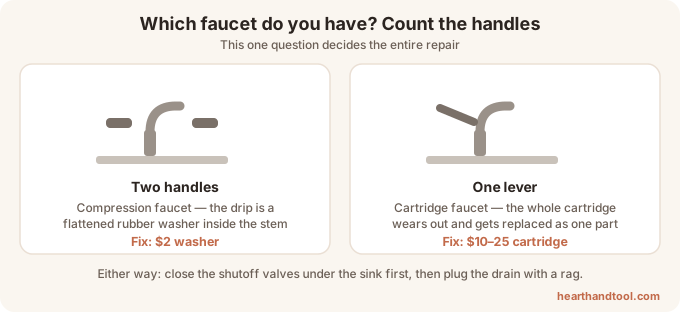
Which faucet do you have?
 Save
Save- Two handles (separate hot and cold) → almost certainly a compression faucet. The fix is a washer.
- One lever that does everything → a cartridge, ball, or ceramic-disc faucet. The fix is a cartridge swap.
Fix A: Two-handle compression faucet (a $2 washer)
 Save
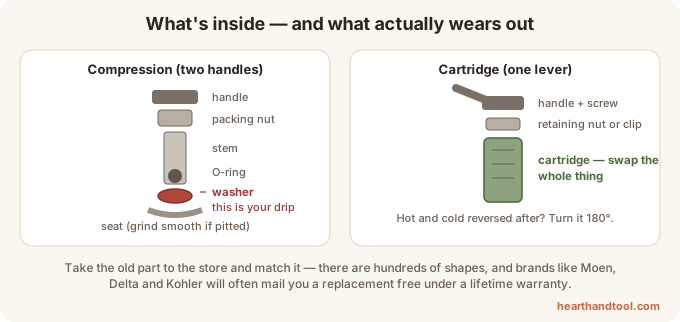
SaveA compression faucet closes by screwing a rubber washer down against a metal seat. Forty years of squeezing flattens the washer — that's your drip.
- Figure out which side drips: feel the water. Warm drip = hot handle; cold = cold handle. Fix that side (or both while you're in there).
- Pry off the handle's decorative cap, remove the handle screw, and pull the handle off.
- Unscrew the packing nut below with an adjustable wrench, and lift out the valve stem.
- At the bottom of the stem is a rubber washer held by one brass screw. Replace the washer with a matching size (a $5 assortment box covers every faucet you'll ever meet), and replace the O-ring on the stem's side while it's out — that one causes handle-area leaks.
- Reassemble, open the shutoffs, and test.
If a new washer only fixes it for a few months, the metal seat underneath is pitted; a seat-dressing tool costs ~$10 and grinds it smooth in a minute.
Fix B: Single-lever faucet (a $10–$25 cartridge)
 Save
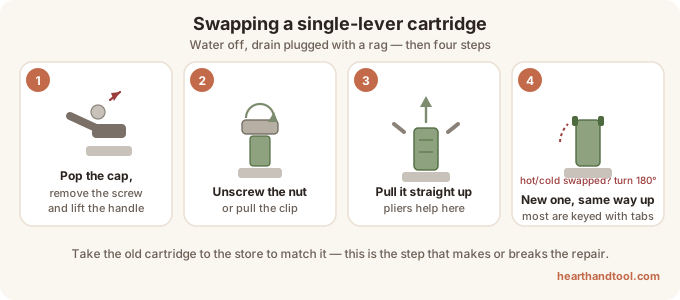
SaveModern single-lever faucets route everything through a replaceable cartridge. When it drips, the cartridge retires.
- Pop the small cap on the handle, remove the screw, pull the handle off. Under it you'll find a retaining nut or clip — unscrew or pull it.
- Pull the cartridge straight up (pliers help; some brands include a plastic puller).
- Take the old cartridge to the hardware store and match it. This is the step that makes or breaks the repair — there are hundreds of cartridge shapes. Bring the faucet's brand name too if you know it. Many brands (Moen, Delta, Kohler) have lifetime warranties and will mail you a cartridge for free.
- Slide the new cartridge in with the same orientation the old one had (most are keyed with tabs), reassemble, and test. Hot and cold reversed? The cartridge went in rotated — pull it and turn it 180°.
 Save
SaveThe drip is fixed — check these two things before closing up
- Aerator: unscrew the little mesh tip of the spout and rinse the grit out of it. Weak or sputtering flow is almost always here, and you already have the tools out.
- Under-sink check: with everything reassembled, run the faucet a minute and slide a dry paper towel over every joint under the sink. A damp towel finds slow leaks years before the cabinet floor does.
When to replace the whole faucet instead
If the faucet body itself is corroded, the finish is flaking into the water, or it's a no-name unit whose cartridge nobody stocks, a solid new faucet runs $60–$120 and installs with the same wrench you're already holding. Put the money there rather than into a third repair of a faucet that's telling you it's done.