 Save
SaveA running toilet sounds harmless, but it's quietly one of the most expensive problems in your house: a bad flapper can leak 200 gallons a day straight down the drain — enough to show up clearly on your water bill.
Here's the reassuring part: inside virtually every toilet tank there are only three parts that matter, they all cost between $5 and $20, and none of them require a plumber or special tools. Lift the tank lid and let's find your culprit.
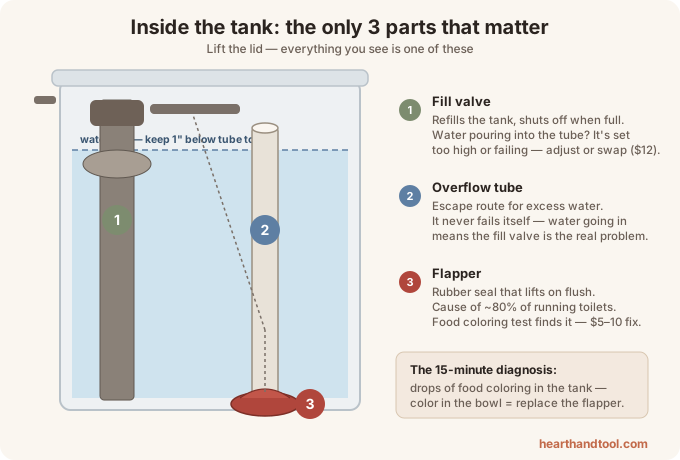
First, understand the 3 parts (30 seconds)
- Flapper — the rubber disc at the bottom center of the tank. It lifts when you flush and seals the tank so it can refill. Cause of ~80% of running toilets.
- Fill valve — the vertical tower on the left that refills the tank after a flush and shuts off when full.
- Overflow tube — the open pipe in the middle. If water rises too high, it escapes down this tube forever. That's a fill valve problem wearing a disguise.
 Save
SaveThe 2-minute diagnosis
- Look at the overflow tube. Is water trickling into the top of it? Your fill valve is set too high or failing → jump to the fill valve section.
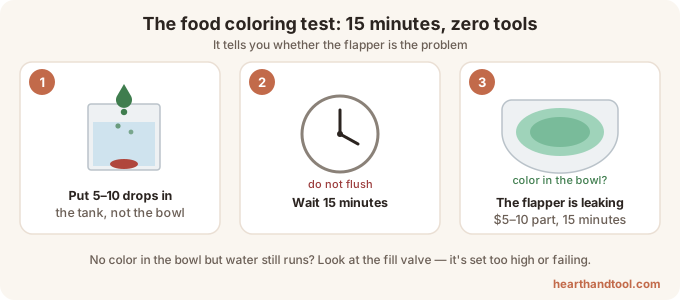
- Food coloring test. Put 5–10 drops of food coloring in the tank (not the bowl). Wait 15 minutes without flushing. Color appears in the bowl? Your flapper is leaking — the most common answer.
- Jiggle the handle. If jiggling stops the running, your flapper chain is catching or the flapper is misaligned.
 Save
SaveFix 1: Replace the flapper ($5–$10)
 Save
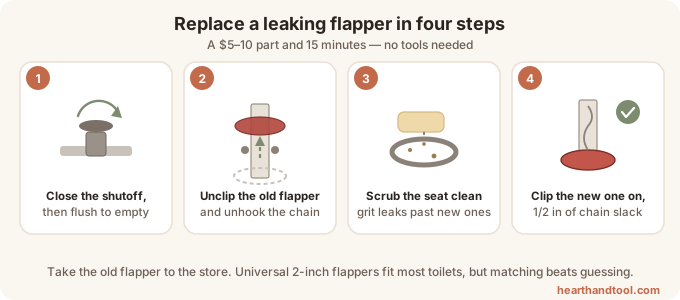
Save- Turn off the water at the small oval valve on the wall behind the toilet (righty-tighty), then flush to empty the tank. No need to empty it completely.
- Unclip the old flapper from the two pegs on the overflow tube and unhook its chain from the flush lever. Take it to the hardware store — flappers vary, and matching yours beats guessing. Universal 2-inch flappers fit most toilets.
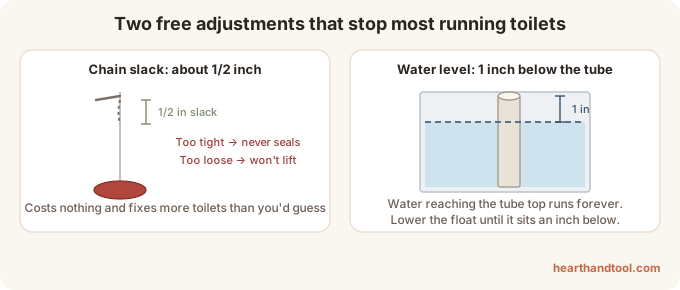
- Clip on the new flapper, hook the chain with about 1/2 inch of slack (too tight = won't seal; too loose = won't lift), turn the water back on, and test flush.
While you're in there, run a finger around the flapper's seat (the ring it seals against). If it feels gritty or slimy, scrub it with a sponge — mineral deposits on the seat can make even a new flapper leak.
Fix 2: Adjust or replace the fill valve ($10–$20)
If water was running into the overflow tube, the tank is overfilling.
Adjust first: most modern fill valves have a screw or slide clip that lowers the float. Set the water level to about 1 inch below the top of the overflow tube (many tanks have a molded water-line mark).
If adjusting doesn't hold, replace it — modern fill valves cost ~$12 and come with instructions in the box:
- Water off, flush, then sponge or towel out the remaining water in the tank.
- Unscrew the supply line from the bottom of the tank, then the plastic lock nut holding the valve. Pull the old valve out.
- Drop in the new valve, hand-tighten the lock nut, reconnect the supply line, water on, set the float height.
The whole swap takes 15–20 minutes the first time.
Fix 3: The chain (free)
 Save
SaveChain wrapped around itself, caught under the flapper, or hooked too tight? Re-hook it with that 1/2 inch of slack. This one costs nothing and fixes more toilets than anyone would guess.
When it's actually a plumber problem
If water leaks outside the toilet (on the floor, around the base, from the tank bolts), or the toilet runs even with the water supply valve fully closed, stop — those involve seals and shutoff valves where a mistake floods a bathroom. A $150 plumber visit beats a $3,000 floor repair.
For everything inside the tank, though? You've got this. It's legitimately one of the easiest repairs in the entire house — the parts are cheap, the water is clean, and nothing you do inside the tank can flood anything.