 Save
SaveWalk into any hardware store and it's easy to believe fixing a house requires a garage full of equipment. It doesn't. Nearly every repair on this site — sticking doors, running toilets, wall patches, hanging shelves — is done with the same short list of tools.
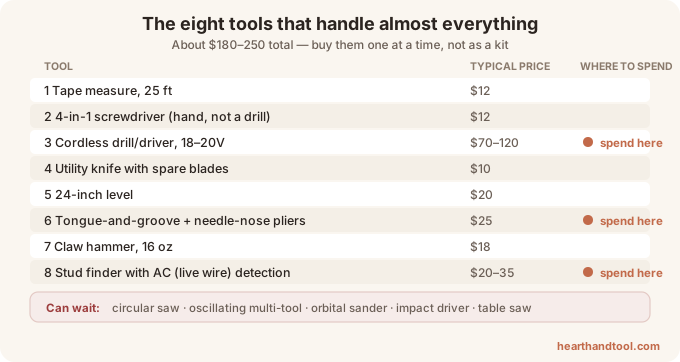
Buy these eight first. They'll cost roughly $180–250 total, and they'll handle years of repairs.
The eight
 Save
Save1. Tape measure (25 ft) — $12. Get one with a wide, stiff blade that stands out a few feet without collapsing; cheap narrow ones fold over exactly when you're measuring alone.
2. A 4-in-1 screwdriver — $12. Two Phillips, two flat, one handle. Buy one good one instead of a 40-piece set of soft-metal drivers that round out the first stubborn screw. Note: for hinge and cabinet screws you want a hand driver, not a drill — a drill strips holes.
3. Cordless drill/driver (18V or 20V) — $70–120. The one tool worth spending on. Two batteries, a clutch, and a keyless chuck. This is also where you pick a battery ecosystem — every future cordless tool you buy should share these batteries, so choose a brand carried by the stores near you.
4. Utility knife — $10. Retractable, with a blade you can change tool-free. Fresh blades are the difference between cutting drywall and tearing it. Keep a pack of spares.
5. 24-inch level — $20. Long enough for shelves and pictures, short enough to store. A phone app is not a substitute; it can't tell you if a whole run is straight.
6. Tongue-and-groove pliers + needle-nose — $25 the pair. The big ones handle plumbing nuts (faucets, toilet supply lines); the small ones do everything fiddly.
7. Claw hammer (16 oz) — $18. Not a sledge, not a tack hammer. A 16-ounce claw pulls nails, taps hinge pins and persuades stuck sashes.
8. Stud finder with AC detection — $20–35. It finds framing and warns you about live wires. For $15 more than a basic model, it's the cheapest safety device in the house.
Plus about $30 of consumables: safety glasses, an assortment of screws and drywall anchors, painter's tape, a tube of wood glue and a small tub of spackle. These get used constantly.
 Save
SaveThe five that can wait
Not because they're bad — because you'll buy the wrong one before you know what you need.
- Circular saw. Most home stores cut sheet goods and lumber to size for free or a couple of dollars. Buy the saw when you're cutting often, not once.
- Oscillating multi-tool. Genuinely useful, genuinely a specialist. Rent or borrow the first time you need one.
- Orbital sander. Sanding blocks handle patches and door edges fine. Buy the sander for your first furniture or cabinet project.
- Impact driver. Fantastic for decks and long screws; overkill and hole-stripping for indoor repairs. Add it when you already own the batteries.
- Table saw. The biggest, most expensive, most dangerous tool people buy first and use twice. It's a woodworking tool, not a home repair tool.
Where to spend and where to save
Spend on the drill, the stud finder and the pliers — the tools where cheap versions actively fail you. Save on the hammer, level, tape and knife; the $15 versions are fine for home use.
Skip the giant combo kits. A 250-piece "home tool set" is mostly sockets you'll never use and drivers that round off. You'll pay less and get better tools buying the eight above one at a time.
Used is fine for hand tools. Hammers, pliers and levels at a yard sale are usually better steel than new budget ones. Never buy used cordless tools — the batteries are the expensive part and they die.
 Save
SaveThe last habit
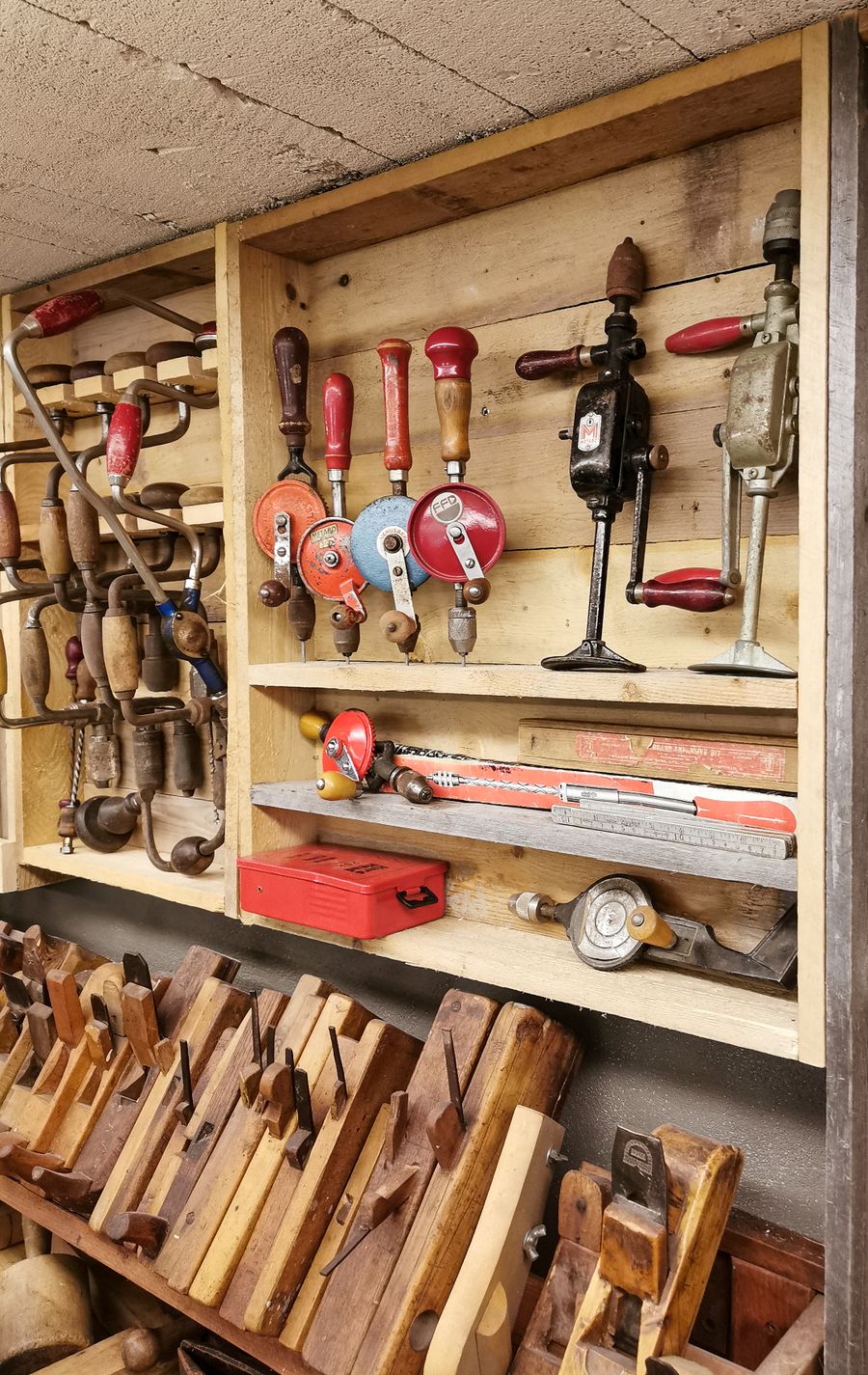
Give the tools one home — a bag, a bucket organizer or a drawer — and put them back after every job. The reason most people "don't have tools" isn't that they never bought any. It's that nobody can find them when the door starts sticking.
Ready for a first project? The floating shelf guide uses six of these eight tools.