 Save
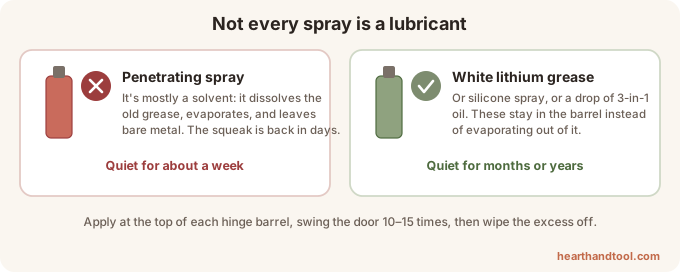
SaveA squeaky hinge is the smallest repair in this entire site — and also the most commonly done wrong. The internet's favorite answer, WD-40, does stop the squeak... for about a week. Then it's back, often worse, because WD-40 is primarily a solvent, not a lubricant: it washes away whatever grease the hinge had left, evaporates, and leaves bare metal grinding on bare metal.
Here's the right way, from the 2-minute version to the deep fix for hinges that squeak again every season.
Why hinges squeak
A hinge is just a pin rotating inside a barrel. It squeaks when the thin film of lubricant between them is gone — from age, dust, rust, or paint that seeped in during the last repaint. Occasionally the real cause is a loose hinge letting parts rub that shouldn't; if your door also sags or sticks, fix that first (see our guide to doors that stick or rub).
 Save
SaveThe 2-minute fix (right lubricant, no disassembly)
- Choose a real lubricant: white lithium grease (best for hinges), silicone spray, or even a drop of 3-in-1 household oil. All under $8, all last months to years instead of days.
- Open the door halfway. Apply a small amount at the top of each hinge barrel, where the pin enters — gravity will pull it down through the joint.
- Swing the door back and forth 10–15 times to work the lubricant in.
- Wipe off the excess with a rag. Excess lubricant doesn't help the hinge — it just collects a gray line of dust.
For most doors, that's the whole job.
The 10-minute deep fix (for repeat offenders)
 Save
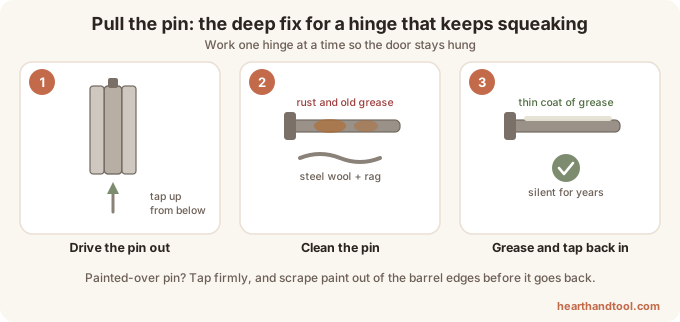
SaveIf a hinge squeaks again within weeks, there's grit or rust inside the barrel, and surface oiling can't reach it. Time to pull the pin.
- Close the door most of the way so it's supported, or wedge a book under the outer corner. Work one hinge at a time — never pull all pins at once, the door will come off on you.
- Remove the hinge pin: set a nail or thin punch under the pin's head from below and tap upward with a hammer, or pry the head up with a flathead screwdriver. Painted-over pins may need a firm tap.
- Look at the pin. Shiny with worn streaks is normal; orange with rust or crusted with old grease is your squeak. Clean it with a rag and a little degreaser; shine off light rust with fine steel wool.
- Coat the pin lightly with white lithium grease and tap it back in.
- Repeat for the other hinges, then swing the door to distribute everything.
A door treated this way typically stays silent for years.
If it still squeaks after all that
The remaining suspects, in order:
- Loose screws letting the hinge flex — tighten every screw on both leaves (a stripped hole fix takes two toothpicks and a dab of wood glue).
- Hinges painted shut — paint inside the barrel acts like grit. Pull the pin and scrape paint out of the barrel edges with a utility knife blade.
- A bent pin or worn-out hinge — hinges are $3–$6 each. Replace like-for-like (same size, same screw pattern), one hinge at a time, and the door never has to come off.
One habit worth adopting
When you repaint a door, slip the hinge pins out and paint with the door removed, or at least mask the hinges. Nearly every "mystery squeak" in an older house traces back to paint in the hinges — thirty seconds of masking tape saves the next owner a decade of squeaking.