 Save
SavePeople agonise over color and pick the finish in three seconds at the counter. That's backwards: color changes how a room feels, but finish decides whether it survives.
Sheen controls two things that pull against each other — how much light the surface reflects (which reveals every imperfection) and how well it takes cleaning. More sheen means tougher and wipeable, but also every roller mark and wall dent on display.
 Save
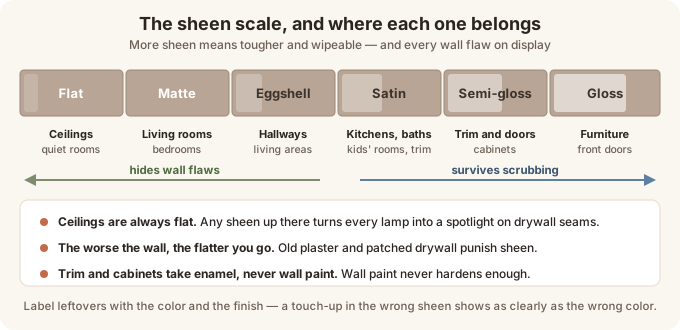
SaveThe scale, from flat to gloss
Flat (matte, no sheen). Absorbs light, hides everything — old drywall repairs, waviness, texture. In exchange it marks easily and scrubbing it can burnish a shiny patch. Ceilings, always. Also low-traffic adult bedrooms and formal rooms.
Matte. Barely any sheen, modern "washable matte" formulas are far tougher than old flats. The default for most living rooms, bedrooms and dining rooms — it hides wall flaws and still takes a gentle wipe.
Eggshell. A faint sheen, like an eggshell. The workhorse for living areas and hallways where you want a little cleanability. Still fairly forgiving of imperfect walls.
Satin. Noticeably soft-glossy and genuinely wipeable. Kitchens, bathrooms, kids' rooms, laundry — and the standard for trim and doors in most homes. It shows more wall flaws, so prep matters.
Semi-gloss. Shiny and hard. Trim, doors, cabinets, bathroom walls in very wet rooms. It advertises every dent and brush mark, which is why prep and technique matter more here than anywhere.
Gloss. Mirror-like, extremely durable, unforgiving. Reserved for furniture, front doors and accent pieces — almost never a whole wall.
 Save
SaveRoom by room
- Ceilings — flat, no exceptions. Sheen up there turns every light fixture into a spotlight on drywall seams.
- Living room, bedrooms — matte or eggshell.
- Hallways, stairways, kids' rooms — eggshell or satin. These get touched constantly.
- Kitchen — satin on walls, semi-gloss on trim. It has to survive grease and wiping.
- Bathroom — satin, or semi-gloss in a small windowless one. Look for a mildew-resistant formula.
- Trim, doors, baseboards — satin or semi-gloss, in a cabinet-and-trim enamel rather than wall paint. See our trim painting guide.
- Cabinets — satin or semi-gloss enamel only. Wall paint never hardens enough for doors people touch daily — the full method is in painting kitchen cabinets.
The rule that saves regret
The worse your walls are, the flatter you should go. Old plaster, patched drywall, textured surfaces and side-lit rooms all punish sheen. If your wall has any waviness at all, a satin wall will show it at every hour of the day.
The inverse applies too: if you're painting a surface that gets touched, wiped or splashed, don't choose flat because it looks nicer. It will not survive, and touch-ups on flat paint show as patches.
 Save
SaveTwo things people get wrong
Same color, different finish, looks like a different color. Sheen changes how the eye reads a color — a satin wall reads slightly darker and more saturated than the same paint in matte. When you're doing walls and trim in one color, that difference is the point (it's what makes color drenching work), but don't be surprised by it.
"Washable" is not the same as "scrubbable." Modern matte paints market washability, and they do wipe — gently. Anywhere that needs actual scrubbing (behind a stove, a kids' hallway) still wants satin.
Buying notes
Finish never changes coverage, so the amount you buy stays the same — run the numbers through our paint calculator. Do keep the leftovers labeled with both the color and the finish, because a touch-up in the wrong sheen shows up as clearly as a touch-up in the wrong color.