 Save
SaveYou stand back from a freshly painted wall, the light hits it from the side, and there they are: lines, ridges, patchy strips. The frustrating part is that they usually weren't visible while the paint was wet.
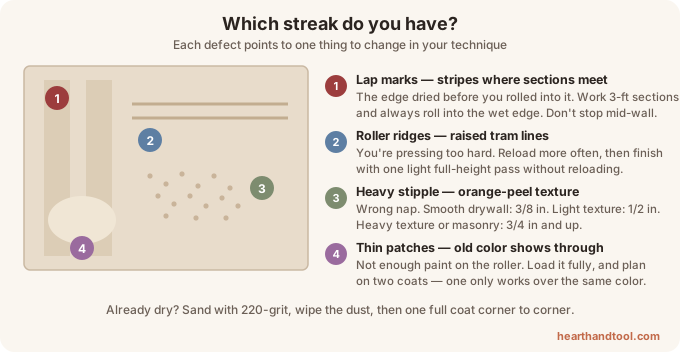
Every one of those defects has a specific cause, and almost all of them are technique rather than paint quality. Find your streak below.
 Save
Save1. Lap marks — visible lines where sections meet
What you see: stripes running the height of the wall, roughly a roller's width apart, slightly darker or glossier.
The cause: the edge of the previous section dried before you rolled into it, so you're laying fresh paint over half-dry paint. That's a double thickness that dries a different shade.
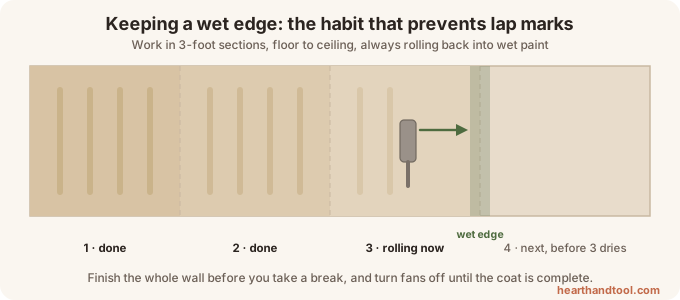
The fix: work in sections about 3 feet wide and always roll into the wet edge of the section you just did. Don't stop mid-wall to answer the door; finish the wall, then take the break. In a hot, dry or breezy room, work faster and turn off fans until the coat is complete.
 Save
Save2. Roller ridges — thin raised lines at the roller's ends
What you see: two parallel tram-lines the width of your roller, standing slightly proud of the wall.
The cause: pressing too hard, which squeezes paint out past the ends of the roller cover.
The fix: let the roller do the work — enough pressure to keep contact, no more. Reload more often instead of squeezing the last paint out. Finish each section with a very light, full-height pass ("laying off") without reloading, which levels the ridges out. Roller frames with rounded, feathered cover ends help too.
3. Heavy stipple — the wall feels like orange peel
What you see: an overall bumpy texture, more pronounced than you wanted.
The cause: the wrong nap length for the surface. Nap is the pile depth of the roller cover, and it's the single most-ignored spec in painting.
The fix: smooth drywall wants a 3/8-inch nap; lightly textured walls 1/2-inch; heavy texture or masonry 3/4-inch and up. Using a 3/4-inch nap on smooth drywall guarantees a stippled finish no matter how good the paint is.
4. Thin patches and "holidays" — the old color shows through
What you see: faint blotches, or a mottled look under side light.
The cause: not enough paint on the roller, usually from dipping the tip rather than loading properly.
The fix: roll the cover fully in the tray or grid until it's saturated but not dripping, then unload it on the wall in a zigzag before spreading. And accept that two coats is the standard — one coat only works when repainting the exact same color.
 Save
Save5. A frame of different color around the edges
What you see: a border along the ceiling, corners and trim that reads slightly different from the field of the wall. Painters call this hatbanding or picture framing.
The cause: the brushed cut-in was dry before the roller got near it, so those bands are brush-textured while the rest is roller-textured.
The fix: cut in one wall at a time and roll it immediately, and bring the roller as close to the edge as it will go — within about an inch. The two textures then blend while both are wet.
6. Marks that appear only after it dries
What you see: dull, flat patches over old repairs, or shiny streaks under lamplight.
The cause: unprimed patches absorbing paint at a different rate ("flashing"), or a sheen that shows every imperfection.
The fix: prime every patch and any bare drywall before painting. And choose the finish deliberately — matte hides wall flaws, satin and semi-gloss advertise them. Our color drenching guide covers which finish belongs on which surface.
How to fix a wall that already dried badly
You don't have to start over. Sand the defects lightly with 220-grit on a block or pole sander — ridges and lap lines knock down quickly. Wipe the dust off with a barely damp cloth, let it dry, then apply one full coat over the entire wall, corner to corner, working in wet-edge sections with the right nap.
One thing worth knowing before you buy: rolling technique matters more than paint price, but very cheap paint is genuinely harder to lay flat because it's thin and dries fast. Mid-range paint forgives beginners. And if you're calculating how much to buy, our paint calculator accounts for coats, doors and windows.