 Save
SaveRenting comes with an unspoken deal: you get a home, but you're not allowed to make it feel like yours. No painting, no drilling, no replacing that beige-on-beige everything.
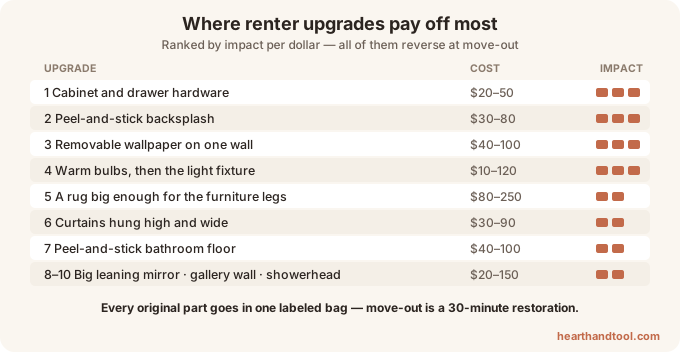
Except the deal has loopholes — a whole industry of them. These ten upgrades install without permanent changes, come back off without a trace, and most travel with you to the next place. Ranked roughly by impact per dollar.
 Save
Save1. Swap the cabinet hardware ($20–50)
Unscrew the landlord's dated knobs, screw in matte black or brushed brass ones, and drop the originals in a labeled bag for move-out day. Ten minutes with a screwdriver changes how the entire kitchen reads. Same trick works on bathroom vanities and dressers.
2. Peel-and-stick backsplash ($30–80)
Modern peel-and-stick tile is genuinely convincing at eye distance — glossy, dimensional, water-resistant. A rental kitchen's tired backsplash disappears in an afternoon. We cover which products actually work (and which peel off by themselves) in our peel-and-stick guide.
3. Removable wallpaper on one wall ($40–100)
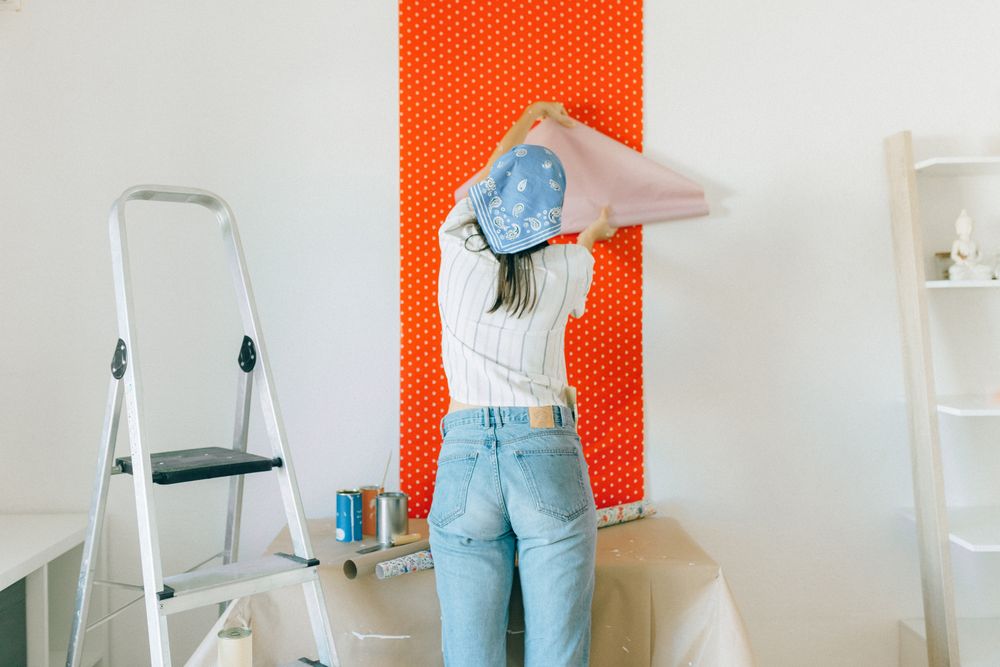
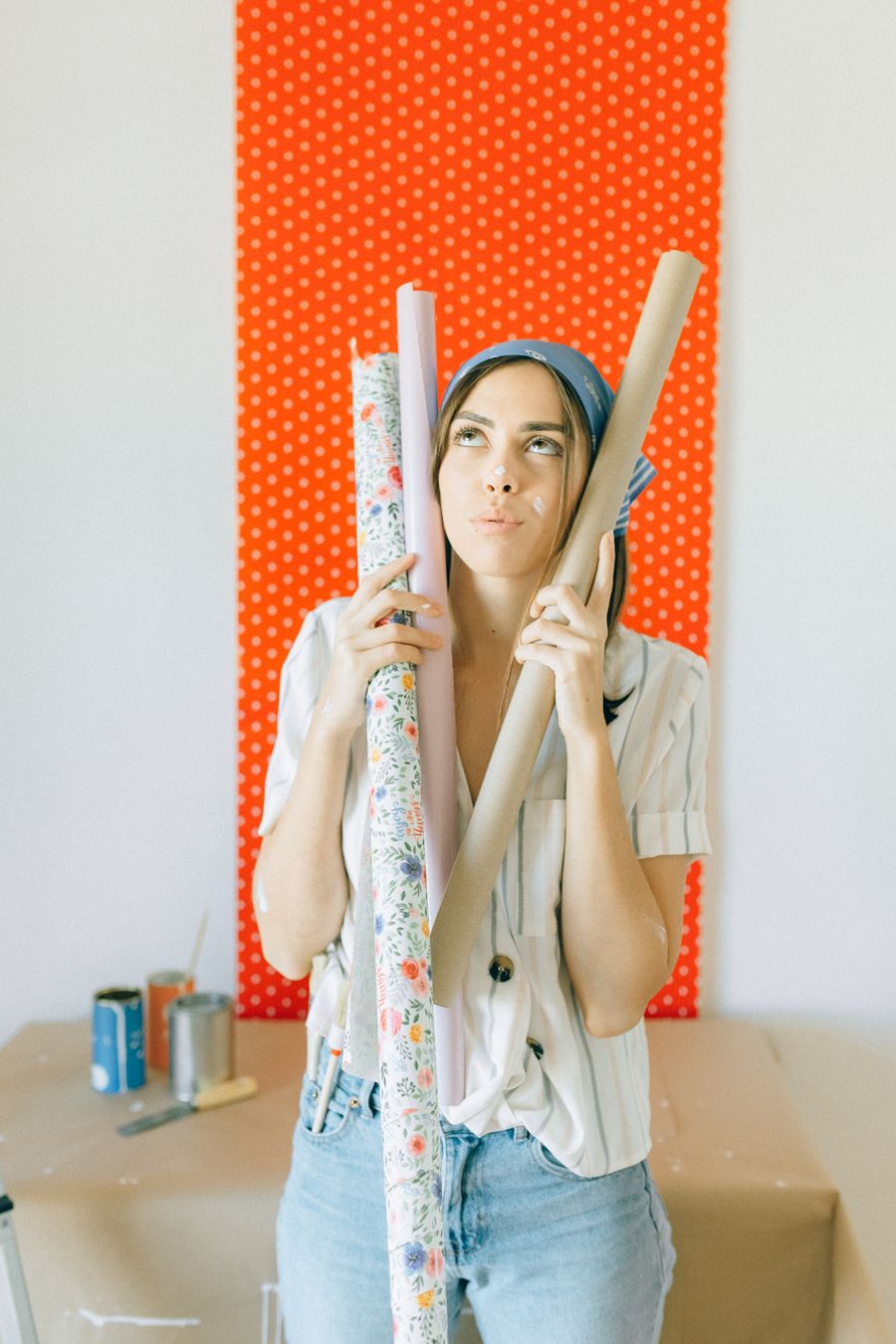
One accent wall behind the bed or sofa gives the room a designed-on-purpose look landlords never provide. Removable wallpaper pulls off clean if the wall was painted with anything better than the cheapest flat paint — test a corner for a week before committing the whole wall.
4. Change the light fixtures — or just the bulbs ($10–120)
The fastest upgrade in the house is replacing every cold blue-white bulb with 2700K warm white. Ten dollars, instant hotel-lobby warmth. One step up: swap a dated flush-mount for a fixture you love and reinstall the original when you leave (30 minutes, breaker off — see our no-electrician lighting guide).
5. A real rug ($80–250)
The single biggest "this apartment became a home" purchase. Size up: the rug should be big enough that at least the front legs of every piece of furniture sit on it. Too-small rugs make rooms look smaller — the opposite of what you paid for.
 Save
Save6. Curtains, hung high and wide ($30–90)
Mount the rod 4–6 inches below the ceiling (tension rods and no-drill brackets exist for the drill-averse) and extend it 8–12 inches past the window on each side. The window reads dramatically bigger, the ceiling taller. Landlord-issued vertical blinds can usually be unclipped and stored.
7. Peel-and-stick floor tile in the bathroom ($40–100)
The most despair-inducing rental feature — pink 1980s bathroom floor — vanishes under vinyl peel-and-stick planks or tiles. Waterproof versions handle bathroom life fine and lift off when you go.
8. A big mirror ($40–150)
A large leaning mirror doubles the perceived light and depth of any small room. No drilling — it literally leans against the wall. Check our small bedroom guide for where to place it (hint: not across from clutter).
9. Command-strip gallery wall ($20–60)
Modern adhesive hooks hold real frames (check the weight rating, buy the big ones). A wall of actual framed art — not posters taped to paint — is the difference between a dorm and an apartment. Pull tabs come off clean.
10. Swap the showerhead ($25–70)
The landlord's showerhead is always the cheapest one that exists. A new one screws on by hand in five minutes, no tools beyond a rag to grip. Keep the old one in the move-out bag with the cabinet knobs.
The move-out bag rule
Every original part goes into one labeled bag in a closet: knobs, showerhead, fixtures, blind clips. Move-out day is a 30-minute restoration and a full deposit back. That's the entire renter strategy: upgrade boldly, reverse cheaply.