 Save
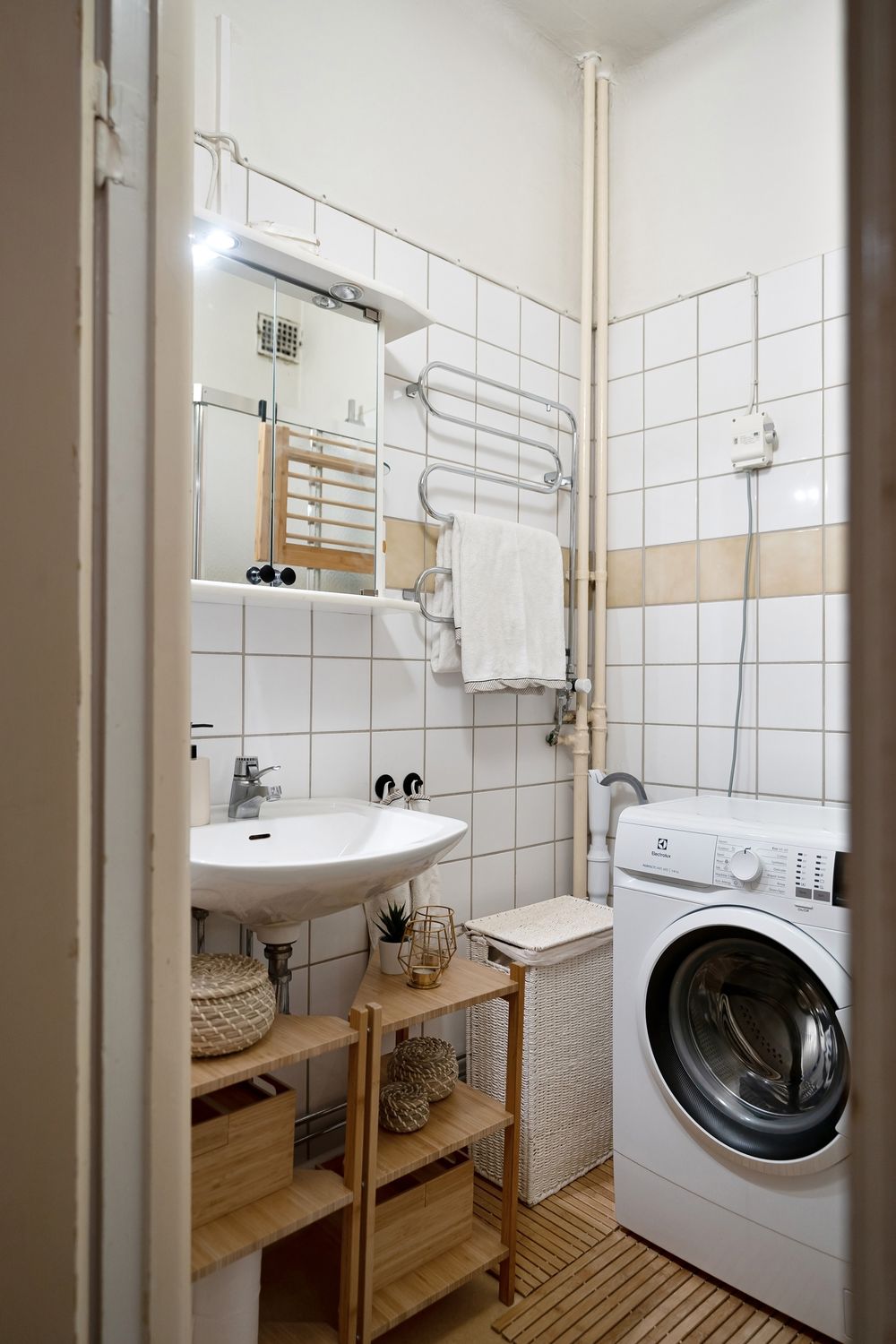
SaveSmall bathrooms aren't short on space — they're short on used space. Almost every one has six areas doing nothing, and all of them can be put to work without a drill, a landlord conversation or a single hole in the tile.
The six empty spots
 Save
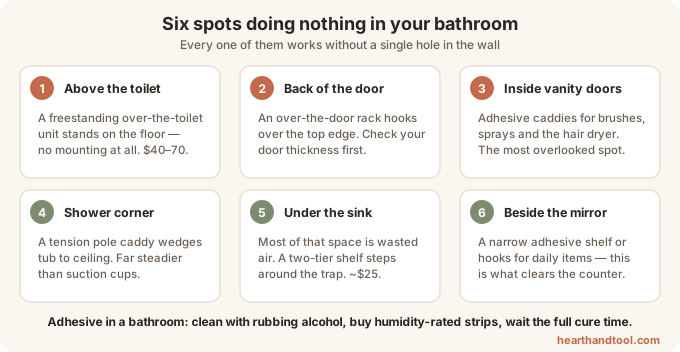
Save1. Above the toilet. The most wasted square footage in the house. A freestanding over-the-toilet shelf unit straddles the tank and needs no mounting at all — it stands on the floor. Around $40–70 and it holds a startling amount.
2. The back of the door. An over-the-door rack hooks over the top edge: towels, robes, a hanging organizer for hair tools. Zero installation. Check your door's thickness first — some racks don't fit thicker doors.
3. Inside the vanity doors. Adhesive-mount caddies on the inside of cabinet doors hold brushes, cleaning sprays and the hair dryer cord. This is the single most overlooked storage in a bathroom.
4. The shower corner. A tension pole caddy wedges from tub to ceiling — far more stable than the hanging kind and it holds four shelves of bottles. No suction cups, which fail on textured tile anyway.
5. Under the sink, vertically. Most under-sink space is wasted air above the plumbing. Stackable bins or a two-tier expandable shelf that steps around the P-trap doubles the usable volume for about $25.
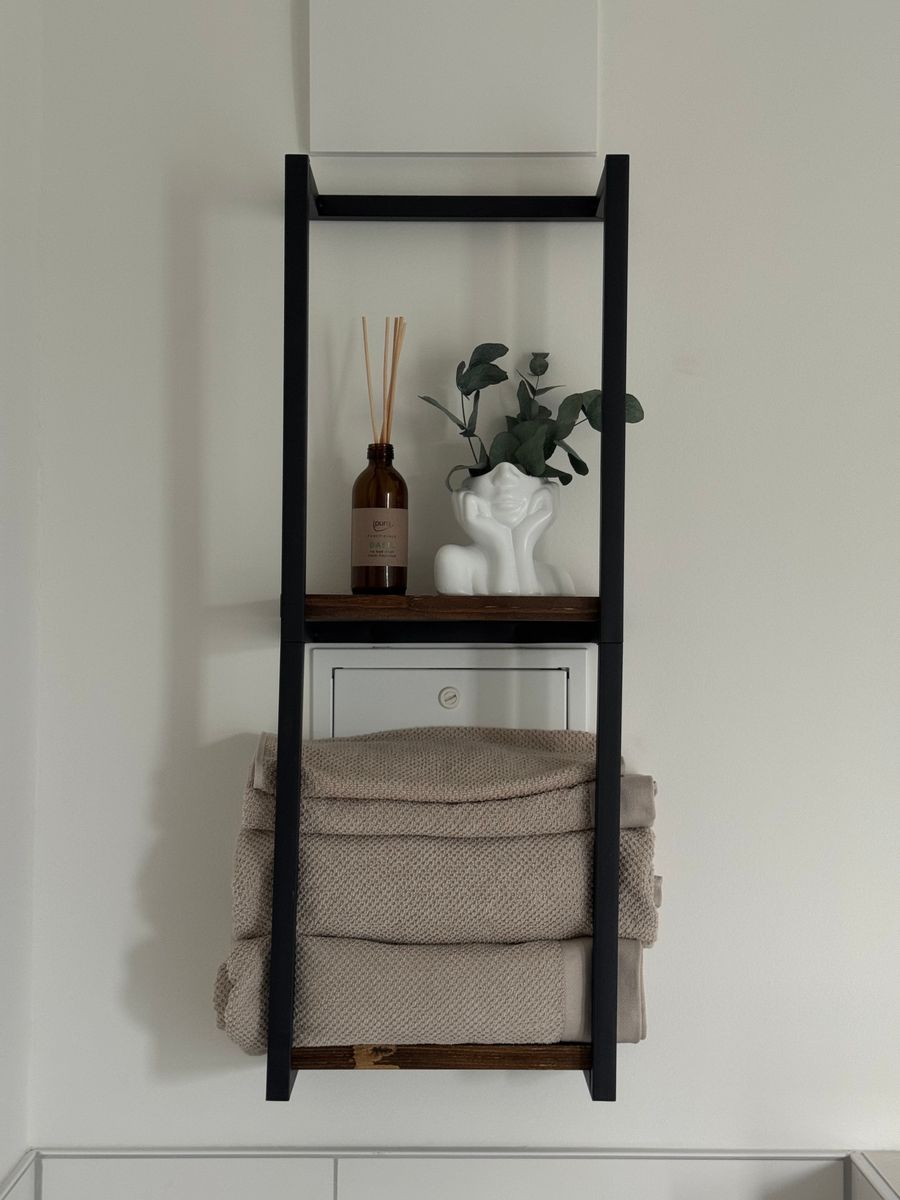
6. The wall beside the mirror or vanity. A narrow adhesive shelf or a set of hooks for daily items — this is where you get the "hotel bathroom" effect, keeping the counter clear.
 Save
SaveThe one rule that decides whether adhesive holds
Bathrooms are the hardest place on earth for adhesive: steam, temperature swings, and surfaces coated in invisible product residue.
Three habits fix that:
- Clean with rubbing alcohol, not bathroom cleaner. Cleaners leave a film designed to repel water — and adhesive.
- Buy strips rated for humidity or outdoor use. Standard mounting strips will let go in a steamy room within months.
- Wait the full cure time. Most strips need an hour before you load them, and 24 hours to reach full strength. Loading immediately is why people think they don't work.
And know the limits: adhesive holds light, everyday items. If you're hanging a loaded shelf or a mirror, that's anchor territory — see our anchor guide by weight before you trust it.
 Save
SaveRenter-friendly, verified
Everything above comes back off at move-out:
- Freestanding units: just move them.
- Over-the-door racks: lift off.
- Tension rods and poles: release the tension.
- Adhesive strips: pull the tab slowly, straight down, and the strip stretches off without taking paint. On old flaky paint, test one in a hidden spot first — same corner test we recommend in the peel-and-stick guide.
Making it look designed rather than crowded
Storage in a small room reads as clutter unless you control two things:
- Match the containers. Six identical baskets read as one calm object; six mismatched ones read as mess. This is the whole trick, and it costs nothing extra.
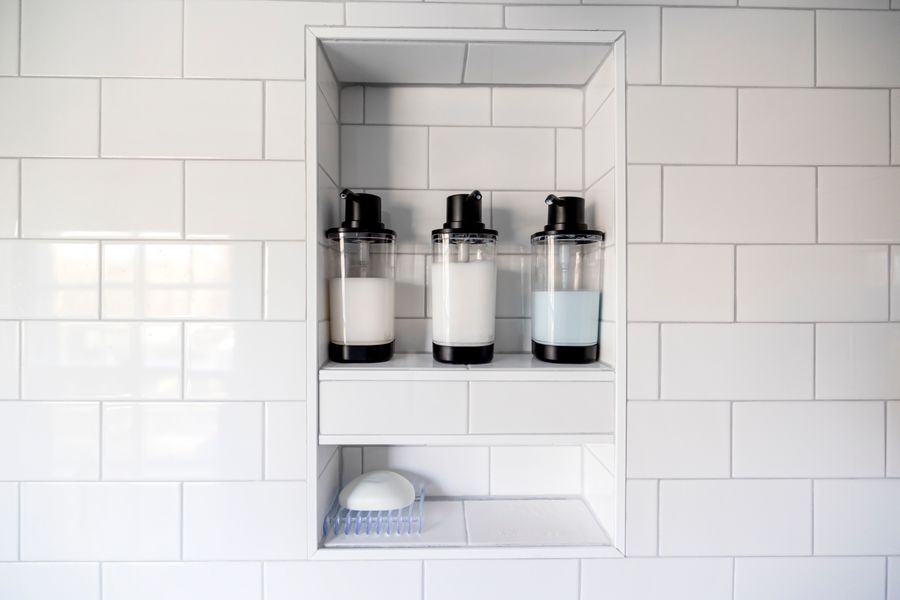
- Decant what you can. Shampoo in matching bottles and cotton swabs in a jar remove a dozen loud labels from your eye line.
- Leave one surface empty. Same principle as the 3-zone countertop rule — a clear stretch is what makes the rest look intentional.
What it costs to do all six
Roughly $150–200 for the full set, and you can do it in one afternoon with no tools. The over-the-toilet unit is the biggest single win if you only do one; the inside-cabinet caddies are the cheapest surprise.